



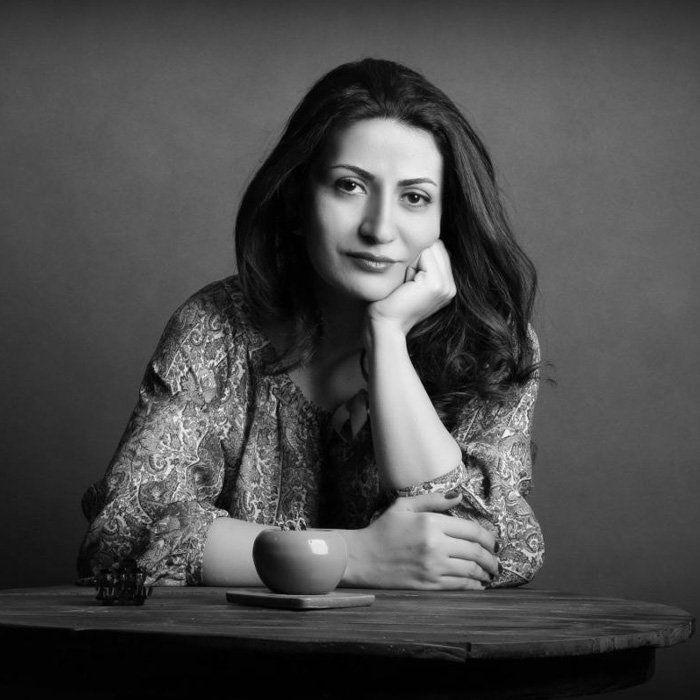
I was born in Tabriz, Iran, in 1980—right at the beginning of the war.
In many ways, I came into the world through conflict, but my connection to music began in peace: I started singing at the age of three.
I grew up in a home where music had no borders. Thanks to my father, I was exposed to many musical traditions—Persian classical, Indian Qawwali, Western symphonies, Azeri folk songs, and more. There was no judgment, only curiosity. That openness shaped the way I hear and feel music today.
Singing has always been how I express my deepest emotions. When I couldn’t say something, I would sing it. It became my most trusted language—the one that could carry grief, joy, longing, and everything in between.
But in Iran, where women were forbidden to sing in public, my voice had nowhere to go. Still, the desire never left me. It lived inside me like a flame.
In 2018, I released my first solo album in Norway, produced by the renowned label KKV. It was a turning point—not just artistically, but personally. From that moment on, my voice became public, heard, and fully alive.
Between 2018 and 2020, I performed across Europe with musicians from different cultures, weaving together old songs with new arrangements.
Then in 2020, I immigrated to Canada—a new chapter.
Here, I’ve found the freedom to share my music openly.
Since arriving, I’ve had the chance to perform in multiple venues and festivals across Toronto, with several successful performances that connected me to new communities and listeners.
Azeri folk music has always felt full of mystery to me—layers of emotion, memory, and cultural codes. That’s what draws me in so deeply. Through these songs, I can express something raw and true about who I am.
My work centers around Azeri and Persian folk music, reimagined through contemporary sounds.
I blend ancient melodies with modern harmonies, textures, and rhythms to create something that feels both timeless and alive.
Right now, I’m working on a project that reimagines traditional Azeri songs while exploring their historical context and musical structure. I’m also studying Canadian folk traditions, comparing scales, stories, and social roots—looking for points of resonance between two distant cultures.
It’s a journey through time and geography, but always led by the voice.